

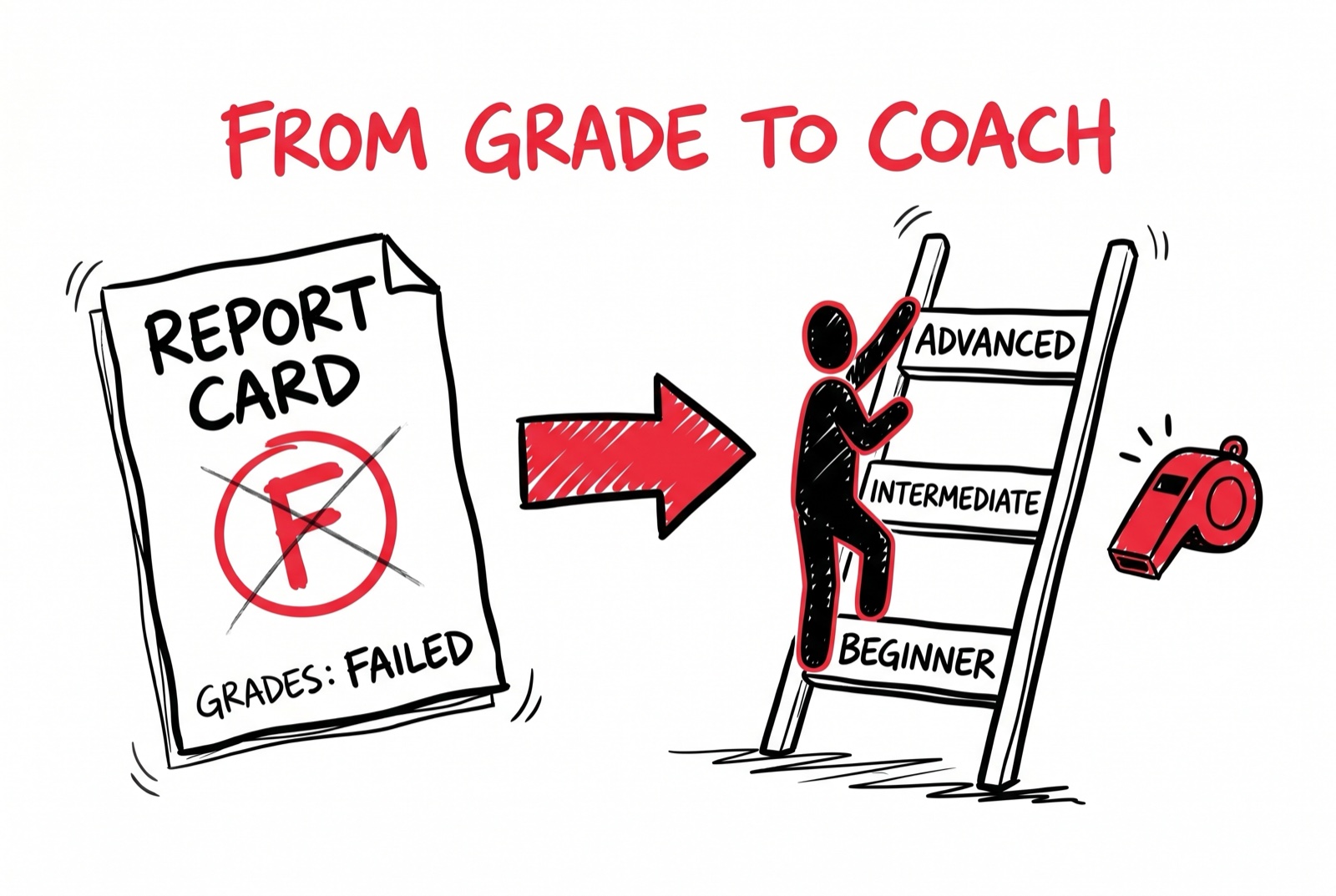
A founder works up the nerve to run their first real customer interview. They get through it. Then the tool hands back a grade: C-minus. “You pitched instead of learning. You asked leading questions.”
All true. And almost completely useless.
A grade is not feedback
A letter grade tells you one thing: you failed. It doesn’t tell you what to do differently, and it lands hardest on exactly the person who needs encouragement most — the founder who just did the scary thing and talked to a stranger about their problem.
I’ve spent over a decade teaching founders to run interviews. The hard part was never naming the mistakes. Everyone can recite them: chase the problem, don’t pitch, don’t lead the witness, learn instead of sell. The hard part is that knowing you lead the witness doesn’t stop you from doing it again in the next conversation. Skills don’t transfer from a report card. They’re built one rep at a time.
So we threw out the grade.
From report card to coach
LEANSpark already assessed how you ran a discovery interview — across five habits drawn from Running Lean: Setup, Learning Frame, Facts Over Fiction, Depth, and Drama & Context. What changed is everything about how that assessment talks to you.
A skill level, not a grade. Your technique now reads as Beginner, Intermediate, or Advanced — so your first interview is the start of a practice, not a failure. A mastery strip shows five segments, one per habit, that fill in as you demonstrate each one across all your interviews. Your growth edge is highlighted. The level and the strip compound over reps, so practice is something you can see.
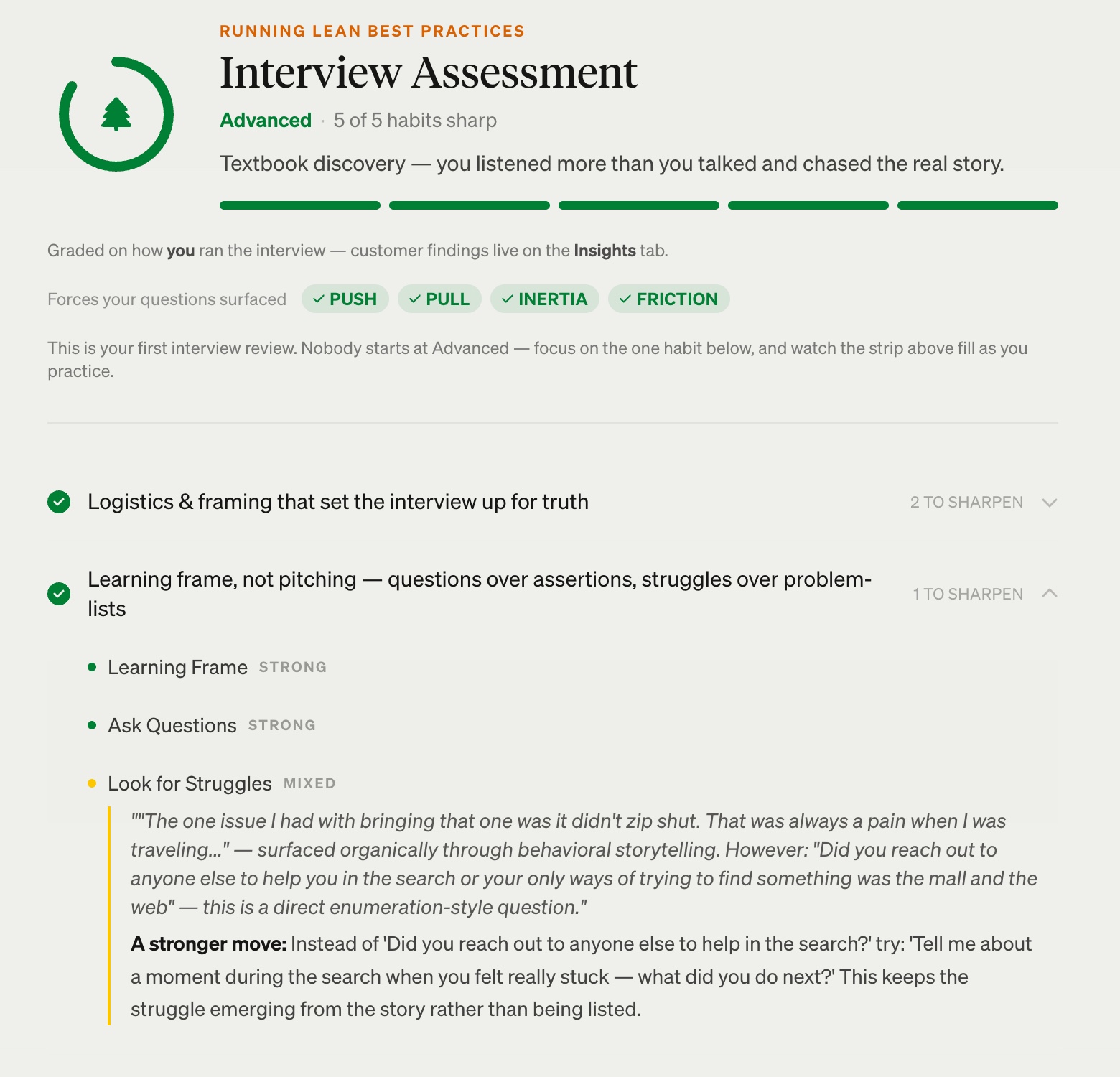
One focus habit, not ten faults. The assessment expands the single highest-leverage thing to work on next — shown with the exact moment from your transcript and a stronger move you could have made. One thing. The one that will change the most.
A redlined transcript. Your real conversation, marked up where it matters: a red note where a habit slipped (pitching instead of learning), an amber note where a customer opened a door you could have explored. “See this in your conversation” jumps you straight to that moment in the transcript and highlights it, so you hear it in context. Coaching notes default on the first time so they’re easy to find, and toggle off after for a clean read.
A win, too. When you ran a habit well, the assessment surfaces that moment in your own words — so you also hear what good sounds like.
The part that makes it compound
Feedback you read once and forget changes nothing. So the loop closes forward.
When you start your next interview, the upload step shows a short prime — the one cue carried from your most recent interview’s focus habit: “Last time, when your customer showed emotion, you moved on. This time, ask what that felt like before moving on.”
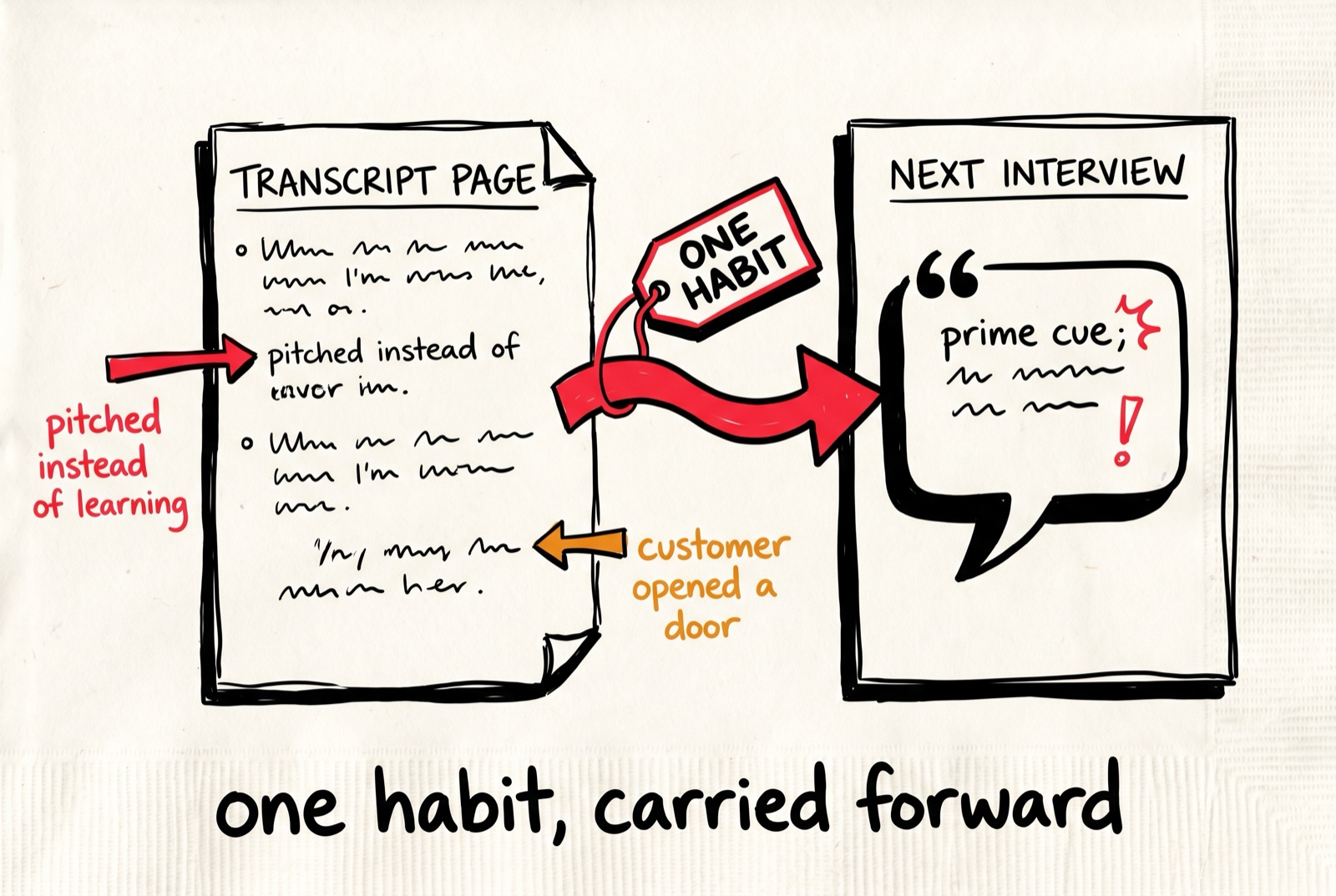
That’s the whole difference between a grade and a coach. A grade ends the conversation. A coach hands you one thing to carry into the next rep — and then checks whether you did it. Each interview makes the next one sharper.
Why this matters now
When anyone can build in a weekend, the bottleneck isn’t building — it’s knowing what to build. And the only way to know is to talk to customers and actually hear them. Last week we shipped the Customer Forces Dojo to train that ear before you interview. This is the other half: a coach that works after, on your real conversations, and compounds.
Talking to customers is the most important skill a founder can build right now. It deserves to be taught like a skill — not graded like an exam.
Open the Interview Assessment tab on any interview with a transcript. Run one, read the one habit it hands you, and carry it into the next.