

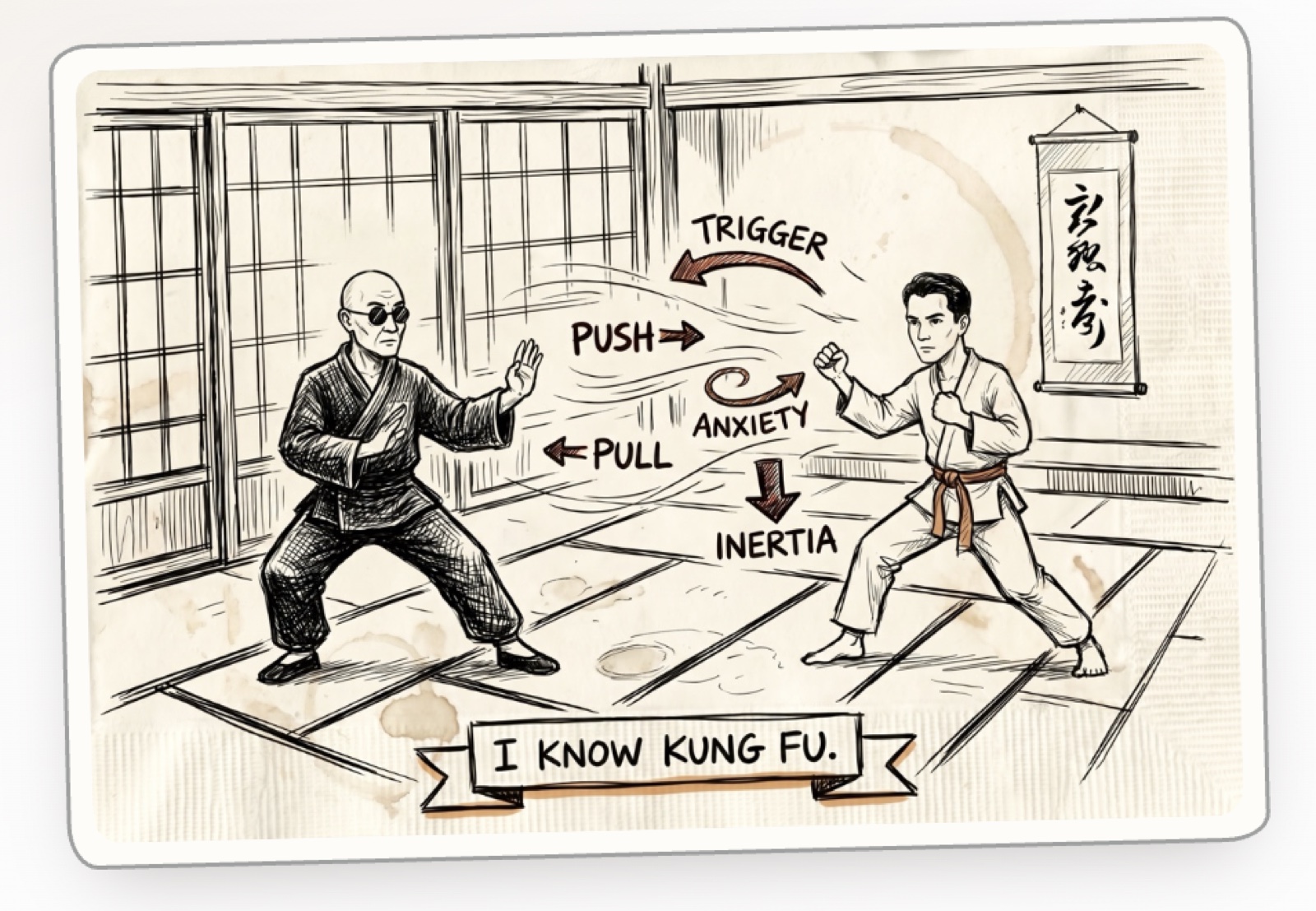
AI made building easy. That’s the problem.
When a founder can ship a working app over a weekend, building stops being the bottleneck. Knowing what to build becomes the whole game. And the only reliable way to figure that out is the same as it’s always been: talk to the people with the problem.
So you’d think customer interviews would be the first skill every founder masters. They’re not.
The skill everyone says they have and almost no one does
I’ve spent over a decade teaching founders to run interviews. The advice fits on an index card. Chase the problem, not your solution. Don’t ask leading questions. Learn, don’t pitch.
Every founder nods. Then I sit in on a real interview and watch the same thing happen.
The customer mentions, in passing, the thing they did right before they went looking for a new tool — the actual switching moment — and the founder skips right past it to ask whether they’d pay $49 a month. The signal was right there. They couldn’t hear it.
That’s the gap nobody warns you about. The tactics are easy to memorize and hard to execute, because the hard part isn’t knowing the rules. It’s perception — catching the force in real time, in a messy conversation, fast enough to act on it.
Memorize-then-drown
Here’s how most people try to close that gap: read a book on interviewing, write down a list of questions, then book a call with a real customer and hope.
It’s the equivalent of reading about swimming and jumping into the deep end. You don’t come up with technique. You come up flailing — and worse, you’ve burned a real customer conversation you can’t get back.
You can’t learn to hear something by reading about it. You learn it by hearing it. Over and over. On examples where someone already knows the right answer.
Perceptual learning: how you actually build an ear
There’s a name for this, and it’s not new. Pilots, radiologists, and musicians all train it: perceptual learning. You expose yourself to many real examples, make a fast call on each, get immediate feedback, and let your brain quietly tune itself until the pattern jumps out at you.
A radiology resident doesn’t learn to spot a tumor by memorizing a definition. They read thousands of scans with the answer key next to them, until the anomaly stops hiding. The knowing becomes seeing.
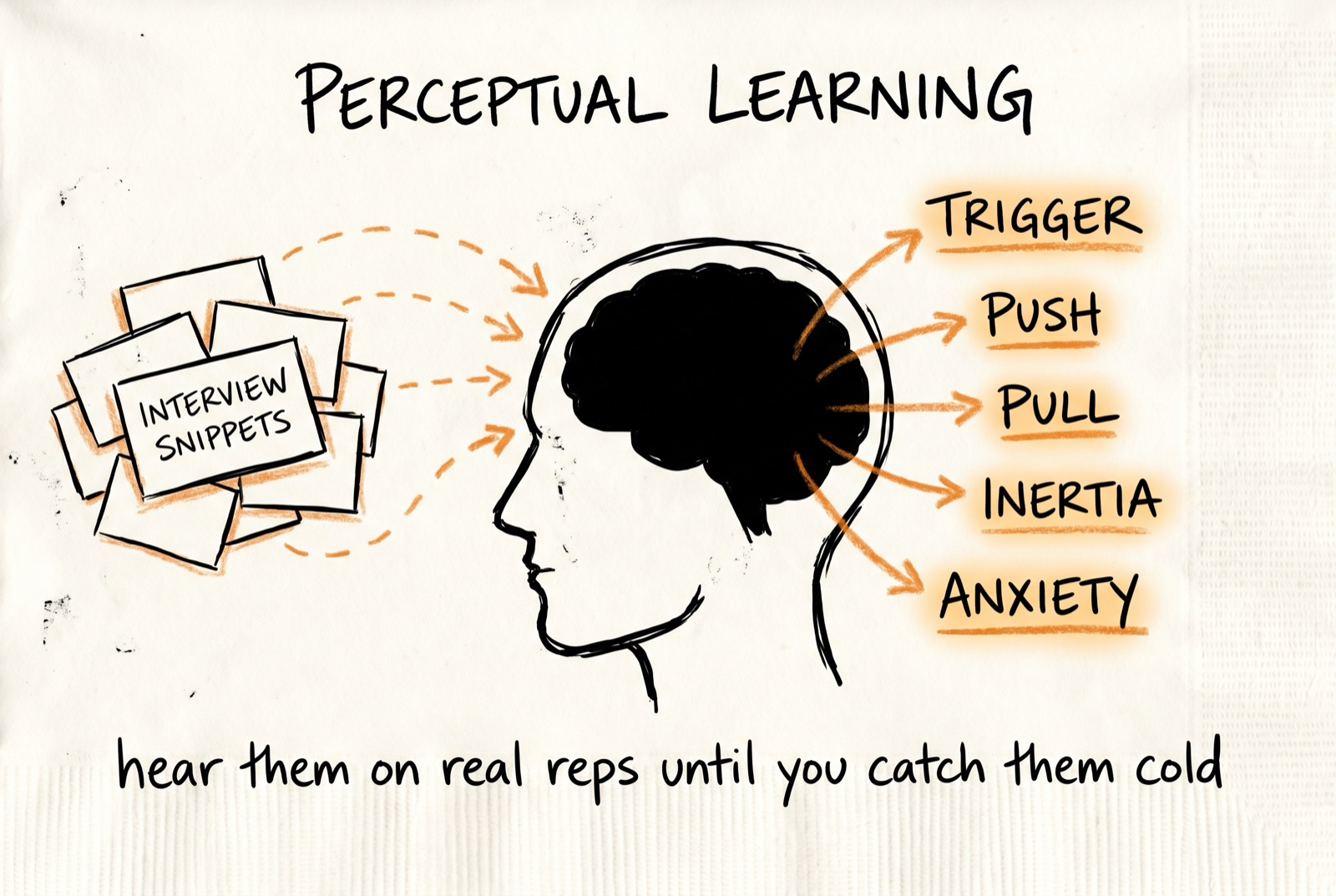
Customer interviews work the same way. The forces behind a customer’s decision — the trigger that started their search, the push of their old frustration, the pull of the new outcome, the inertia and anxiety holding them back — are all sitting in the recording. Hearing them is a perceptual skill. And perceptual skills are trainable, at no stakes, before you ever talk to a real person.
The Customer Forces Dojo
That’s what we just built into LEANSpark.
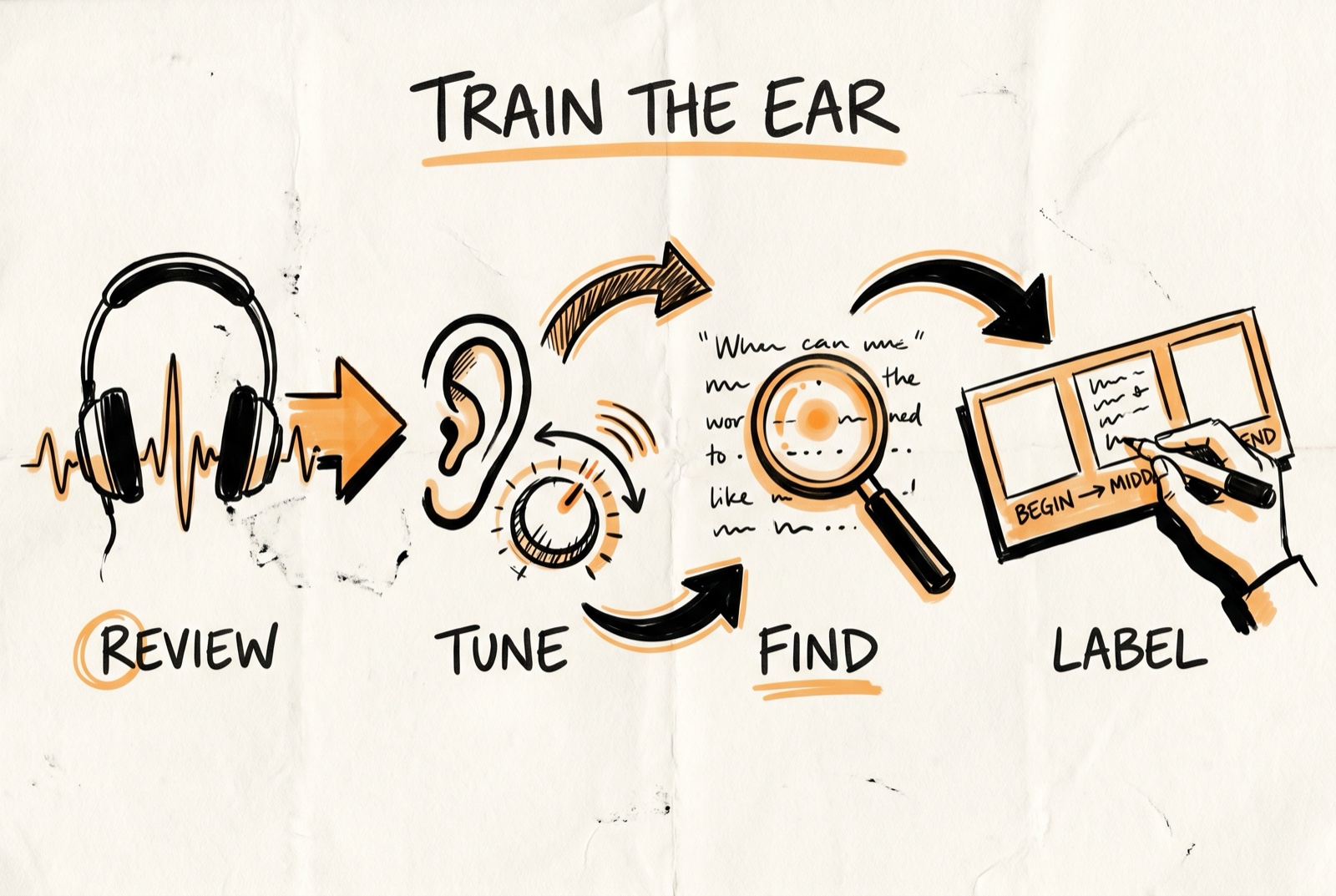
The Customer Forces Dojo is a no-stakes place to train your ear on a real, expert-run interview before you run your own. You open a recorded interview in simulation mode and work through a short, stepped flow:
- Review the interview. Listen to the recording and read the transcript. No labeling yet — just get a feel for the customer’s story.
- Tune your ear. A discrimination warm-up: commit to which force you’re hearing, point at the exact word that tells you, then see the answer. Evidence first, no peeking.
- Find it. Spot the force in a real stretch of transcript — or correctly call out a stretch that carries none.
- Label. Highlight the soundbites and write the customer’s three-act story into a canvas, graded against the interview’s own forces.
A judge reads why you attributed each force — not whether your tag matched a label. The most common miss it’s built to catch is the subtle one: mistaking what a customer says they wanted (the stated pull) for the force that actually moved them.
Once you can hear them cold, the scaffolding fades. You go straight from review to labeling an interview unassisted.
It grades the skill, not the busywork
The dojo tracks a real capability that advances forward-only: Training → Recognized → Demonstrated.
And it’s deliberately hard to game. Only your own reps move the needle — never a rep where LEANSpark handed you the answer, never a lesson you clicked through. To reach Demonstrated, you have to reconstruct the story and attribute the forces yourself, with sound reasoning, across two different interviews in two different markets. Hearing it once on one customer isn’t proof you can hear it cold on a stranger.
When you get there, LEANSpark doesn’t hand you a trophy. It replays your own growth: “on the first interview you missed the inertia; on the second you caught it cold.”
Train the ear before the conversation
Building was never the hard part. Hearing the customer is. And the founders who win the AI era won’t be the ones who ship fastest — they’ll be the ones who know what’s worth shipping.
The dojo is live now. Open it from the Skills page, or just tell LEANSpark you want to get better at customer interviews.
Listen to an expert interview. Capture what you hear. Let your brain do the rest.