

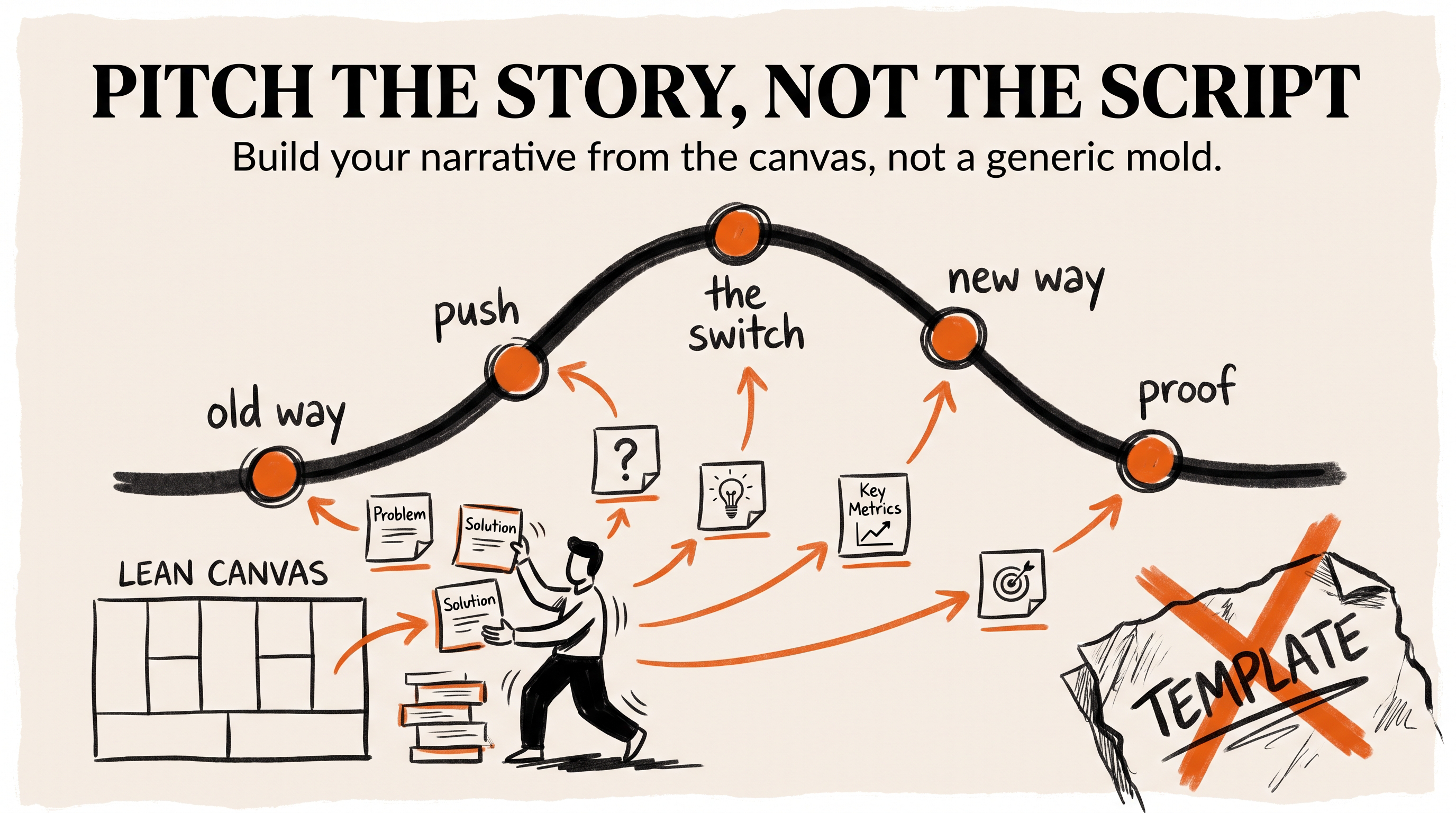
Investors can smell a template from the second slide.
Here’s how it happens. A founder downloads the ten-slide deck outline everyone recommends. Problem, solution, market size, team. She fills in her nouns, rehearses the transitions, and delivers it clean. The investor nods politely and passes. So does the next one.
That’s the mad-libs pitch. You borrowed someone else’s structure and poured your words into the blanks. It’s grammatically correct and completely forgettable, because the person across the table has heard the same skeleton forty times this month. A script tells them about your product. Only a story makes them feel the switch.
But here’s the thing. A pitch was never a summary of your business. It’s the story of a customer moving from an old way that stopped working to a new way that does, and why now. You already have the raw material. It’s sitting in your canvas.
So LEANSpark now builds your pitches as stories.
Four pitches, one home
The Pitch page is now the visual home for all four pitches you’ll need: the Elevator pitch for the hallway, the Business Model Story for the whole model, the Founder Story for why you, and the Mafia Offer for the moment you ask someone to buy. Each is assembled from your stress-tested canvas, not from a blank template, so the beats are your evidence, in narrative order.
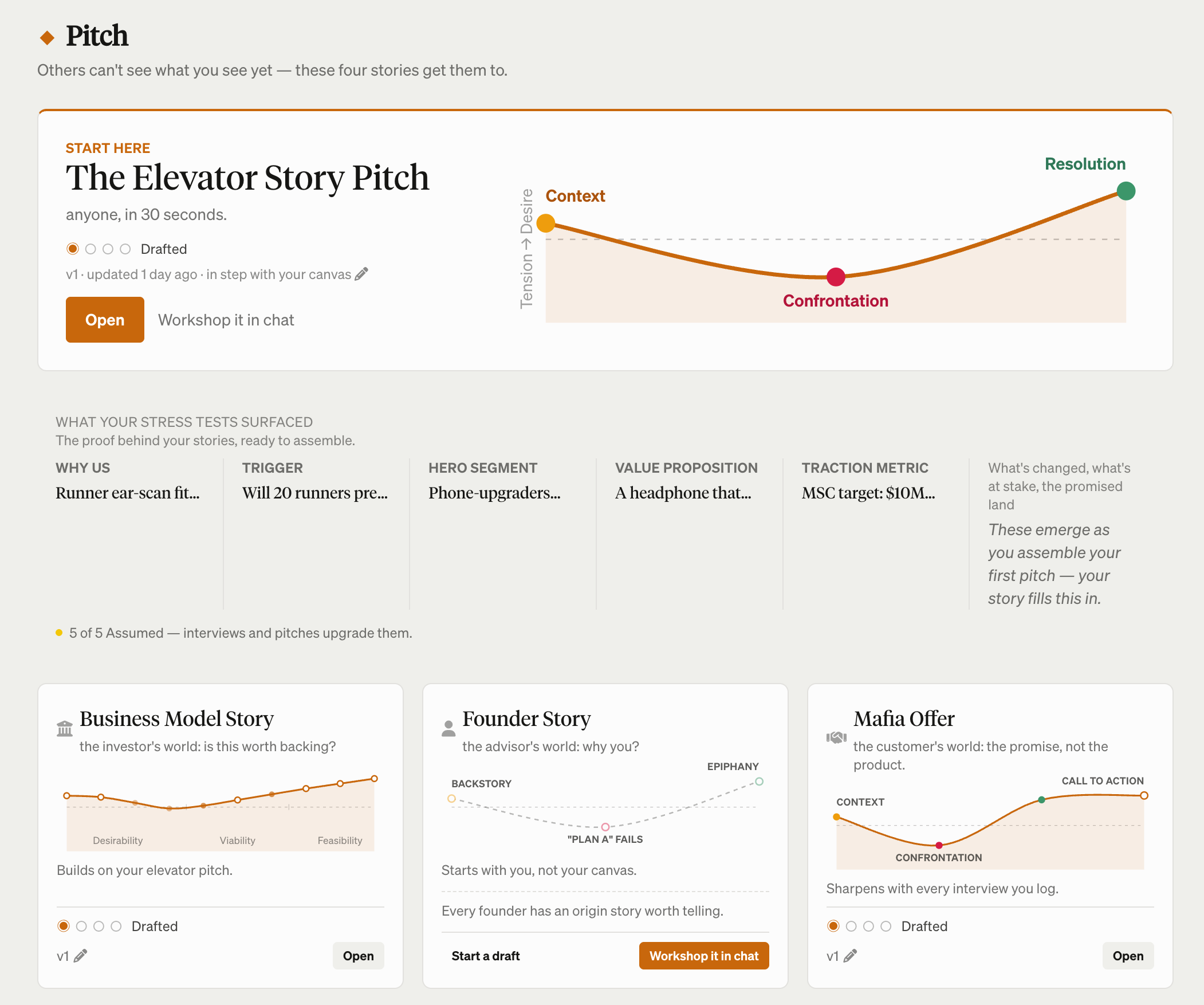
Open any of them and you get a story view, not a slide list: a narrative arc with each beat colored by the Customer Force doing the work (Push, Pull, Friction, Inertia), inline editing, and short concept notes that teach why each beat exists.
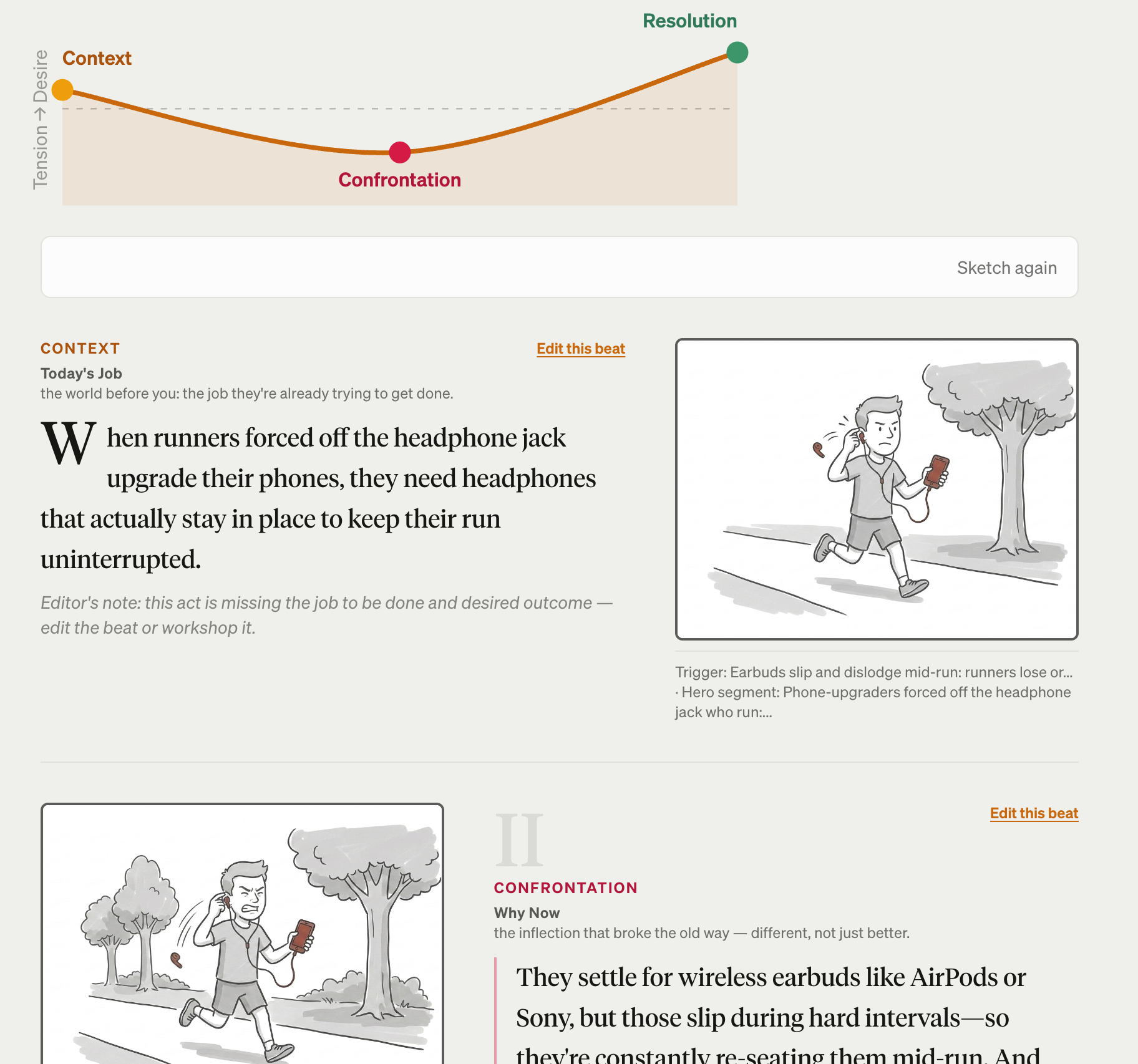
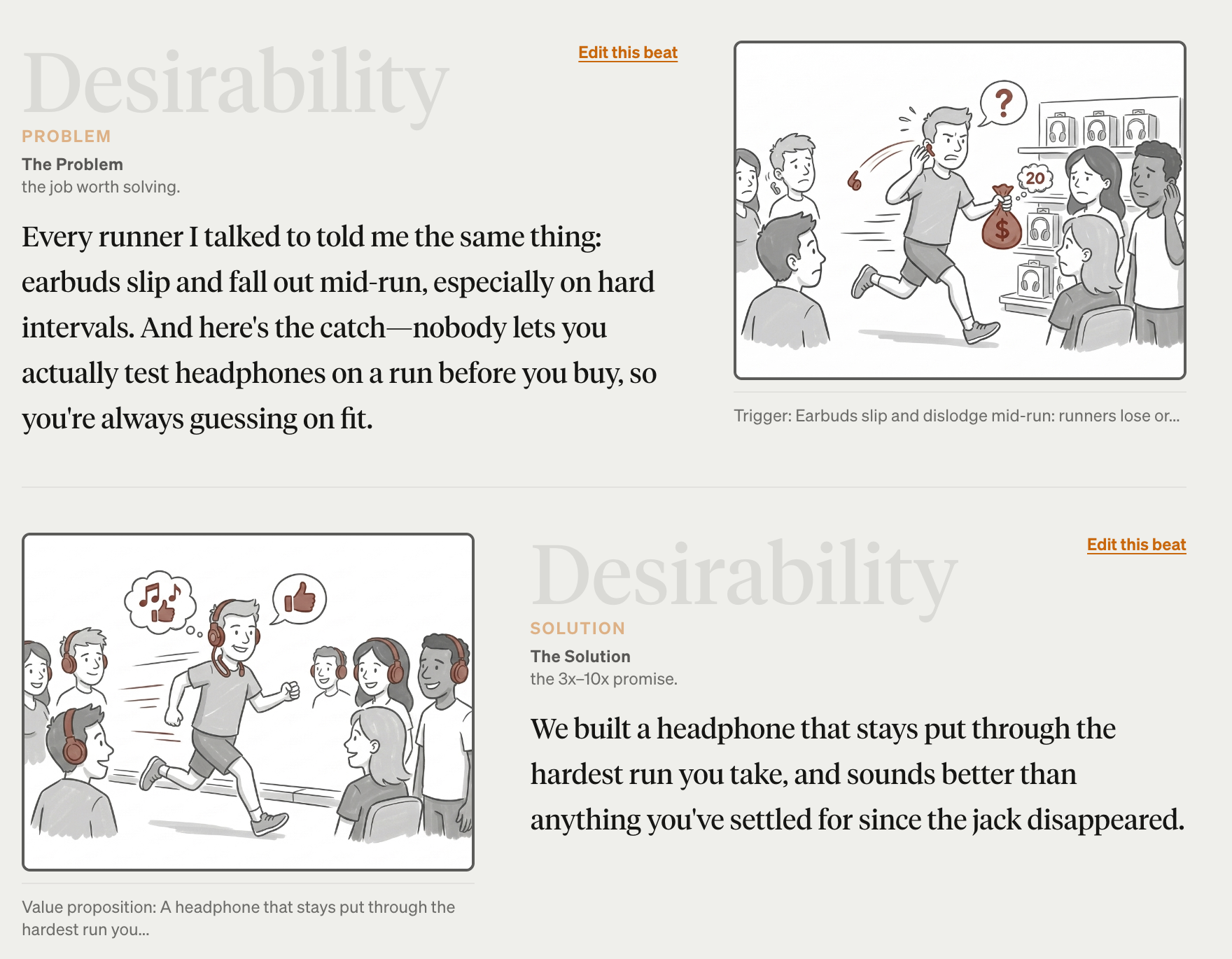
Your pitch even illustrates itself: every version gets napkin-style storyboard panels, and when you edit a beat, only that panel redraws.
Here’s the kicker: you have to earn the pitch
Generating a new pitch requires your model to pass its four core stress-test gates first. If it can’t, LEANSpark doesn’t hand you prettier words. It steers you into the assessment to fix the model, because you can’t pitch your way out of an unvalidated business. Polish on top of a broken model is just a better-lit collapse.
A pitch isn’t done when it’s written
Every pitch carries a journey: drafted, grounded, practiced, resonating. Writing it is the start. Grounding it in evidence, practicing the delivery, and watching it land with real audiences is the work. And the ladder is strict: a pitch you’ve practiced on assumed ingredients still reads Drafted, because rehearsing a guess doesn’t make it true.
Startups are stories. Your customer’s interview is one. Your pitch is one. The founders who win are the ones who can tell the story of the switch better than anyone else in the room.
Open your Pitch page, pick the pitch you’ll need next week, and read it out loud. If it doesn’t sound like a story, you now have the tool to fix that.