Learn to extract actionable insights from customer interviews
Why Start with Analysis Instead of Doing
The Perceptual Learning Approach That Works
After each problem discovery interview, you'll end up with a lot of raw information, which can be overwhelming to track. This problem is only further exacerbated as you conduct more interviews.
The end goal of these interviews isn't collecting random information to fill up a 20-page customer research report, but summarizing your learnings into actionable insights.
KEY INSIGHT: There aren't an infinite number of customer forces stories for any given market. Patterns quickly emerge, and most markets have 3-5 stories that reoccur.
You do this by summarizing each interview into a Customer Forces Story.
Writing Customer Forces Stories is Post-Interview Work
It's important to emphasize that writing a Customer Forces Story is a post-interview process, not something you do during the interview.
Here's why.
Writing a Customer Forces Story is Like Writing a Book Report
Before you can summarize a book, you have to read it in its entirety. Also, simply highlighting key passages or copy-pasting them into your summary seldom leads to an insightful summary. You have to synthesize what you read and rewrite it in your own words.
This is especially true with customer interviews, where insights don't typically unravel chronologically due to the nature of discovery but instead are scattered throughout the interview.
Best Practices for Post-Processing
Reserve 15 minutes after each interview to post-process your raw notes and interview transcript into a Customer Forces Story while your memory is still fresh
Record your interviews (with permission) which allows you to capture the raw conversation without fear of missing something
Use the Customer Forces AI tool to analyze your interview if you have a recording
If interviewing in pairs, create your own version independently and then compare notes to avoid group think
Customer Forces
Customer Forces is a behavioral customer journey model that describes the causal forces that shape how people hire (select and use) a solution to get a job done.
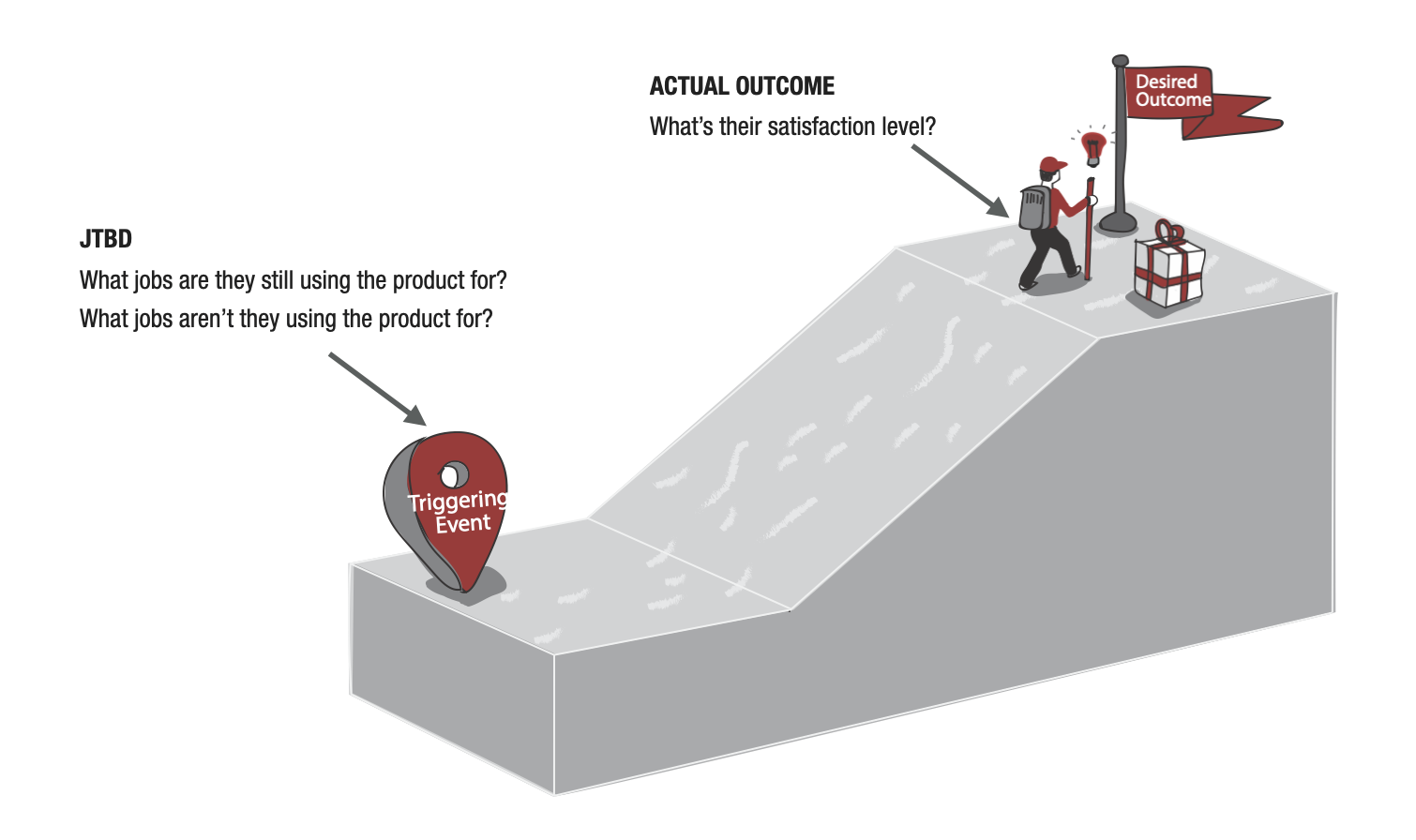
A job to be done is the instantiation of an unmet need or want (desired outcome) in response to a triggering event (situation).
Important Distinction: Hiring a solution is not the same as buying a solution. We buy many products with the best intentions of using them, but they collect dust instead. Hiring a solution is selecting and using a solution (whether previously purchased or not) in response to a job we find ourselves needing/wanting to do.
Overview
The basic premise of the customer forces model is that customer behavior isn't random but driven by a set of causal events and forces that shape a customer's actions over a timeline.
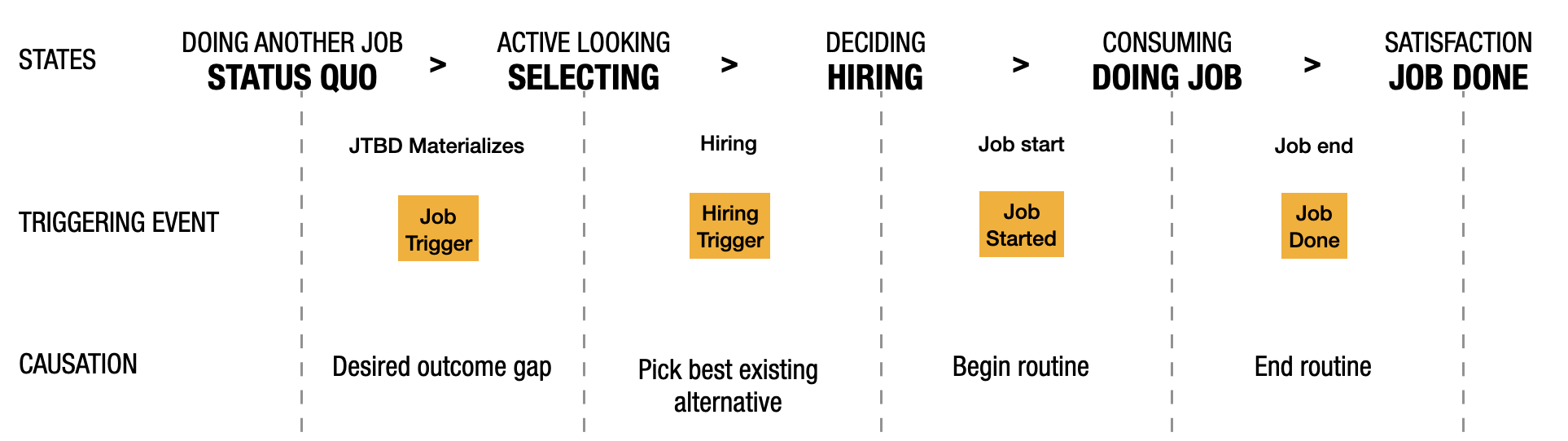
We study two types of customer journey timelines: Routine job timelines and switching timelines.
A routine job timeline describes how people select and use (hire) an existing product they already own to get a job done.
A switching timeline describes how people select and use (hire) a new product to get a job done.
Both timelines start with an inciting triggering event that starts the customer journey. The customer then goes through several states over the timeline.
A routine job timeline kicks off with a job trigger and ends with the job done:
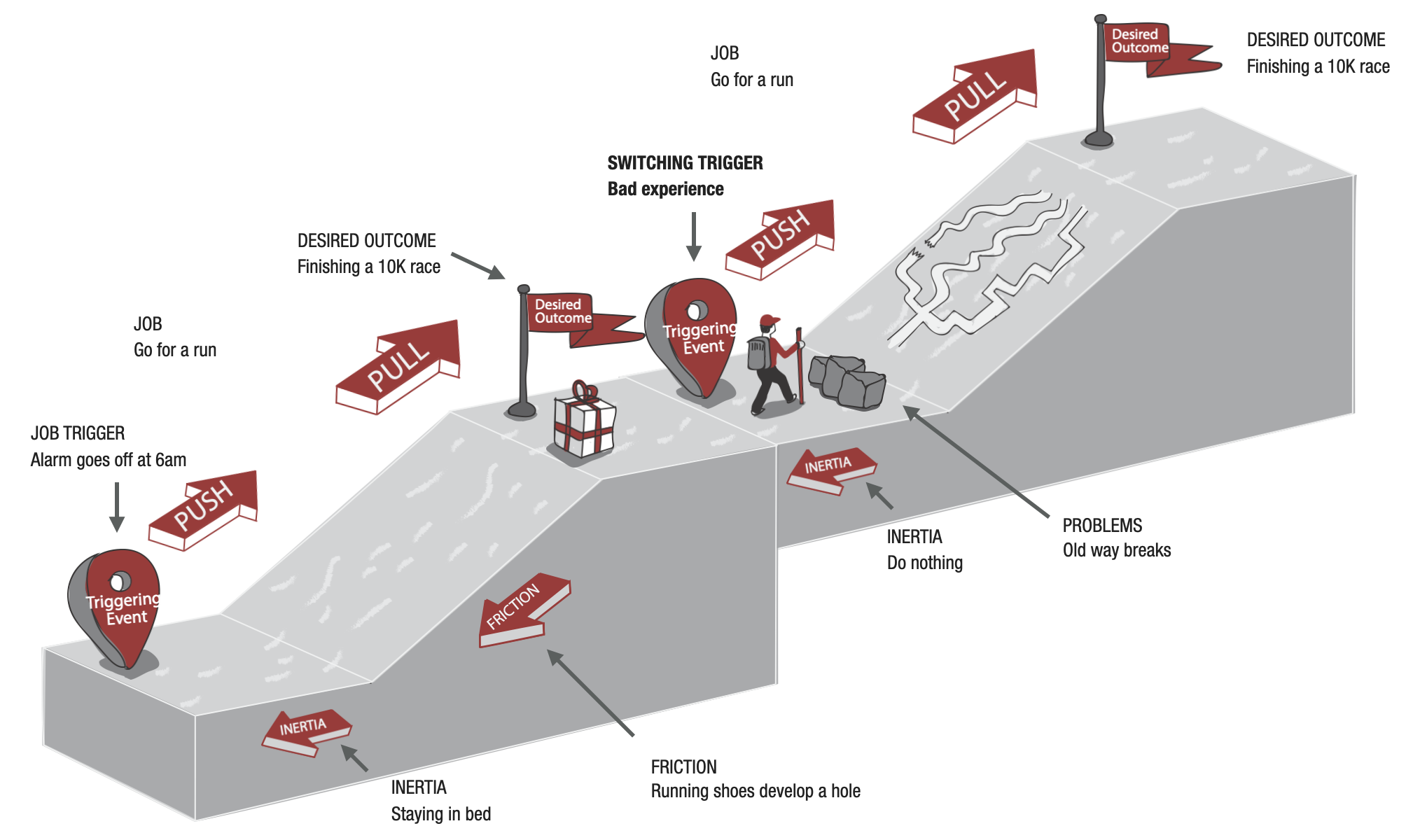
A switching timeline kicks off with a switching trigger (that breaks the old way) and ends with the customer switching to a new way:
The Four Forces
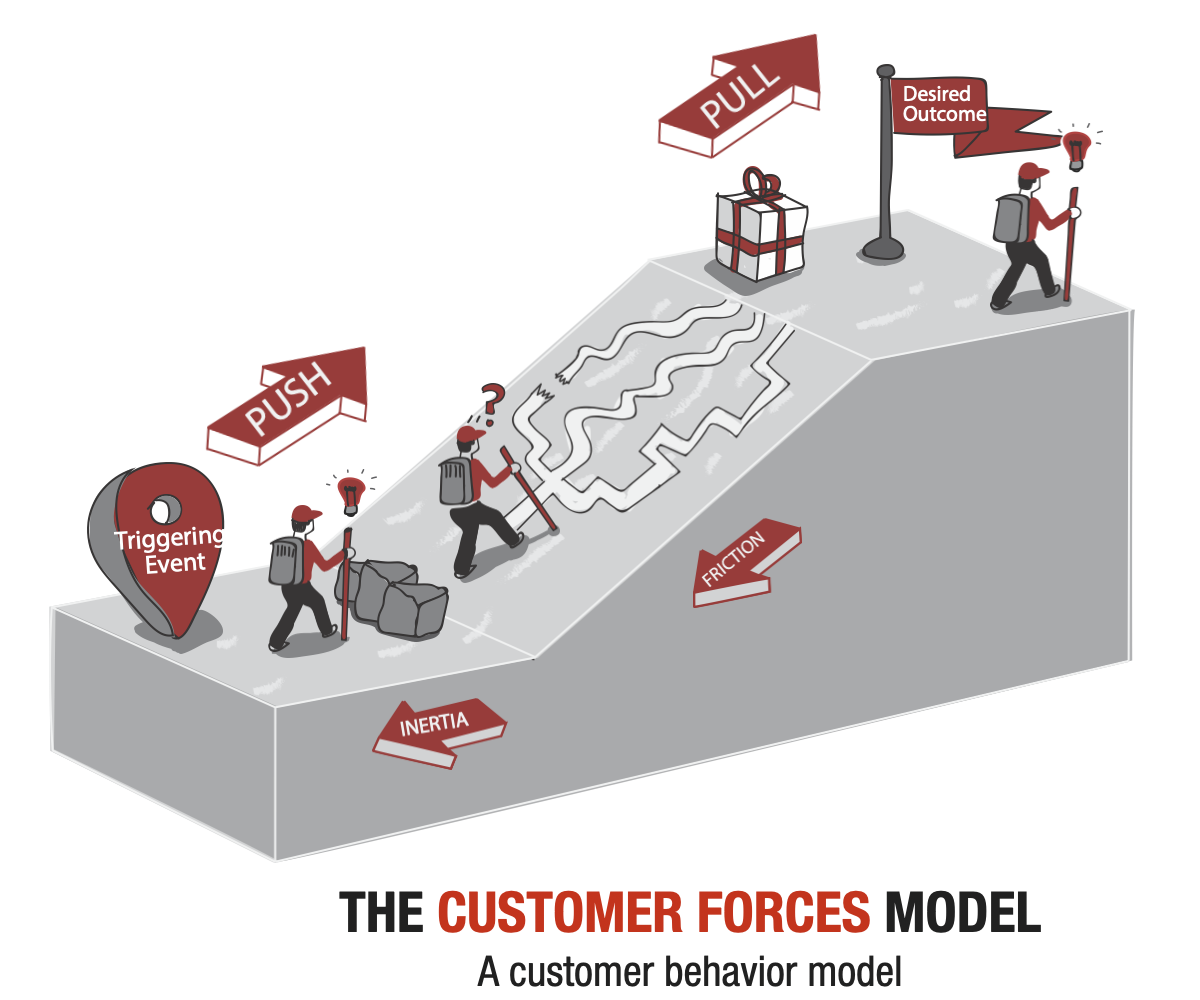
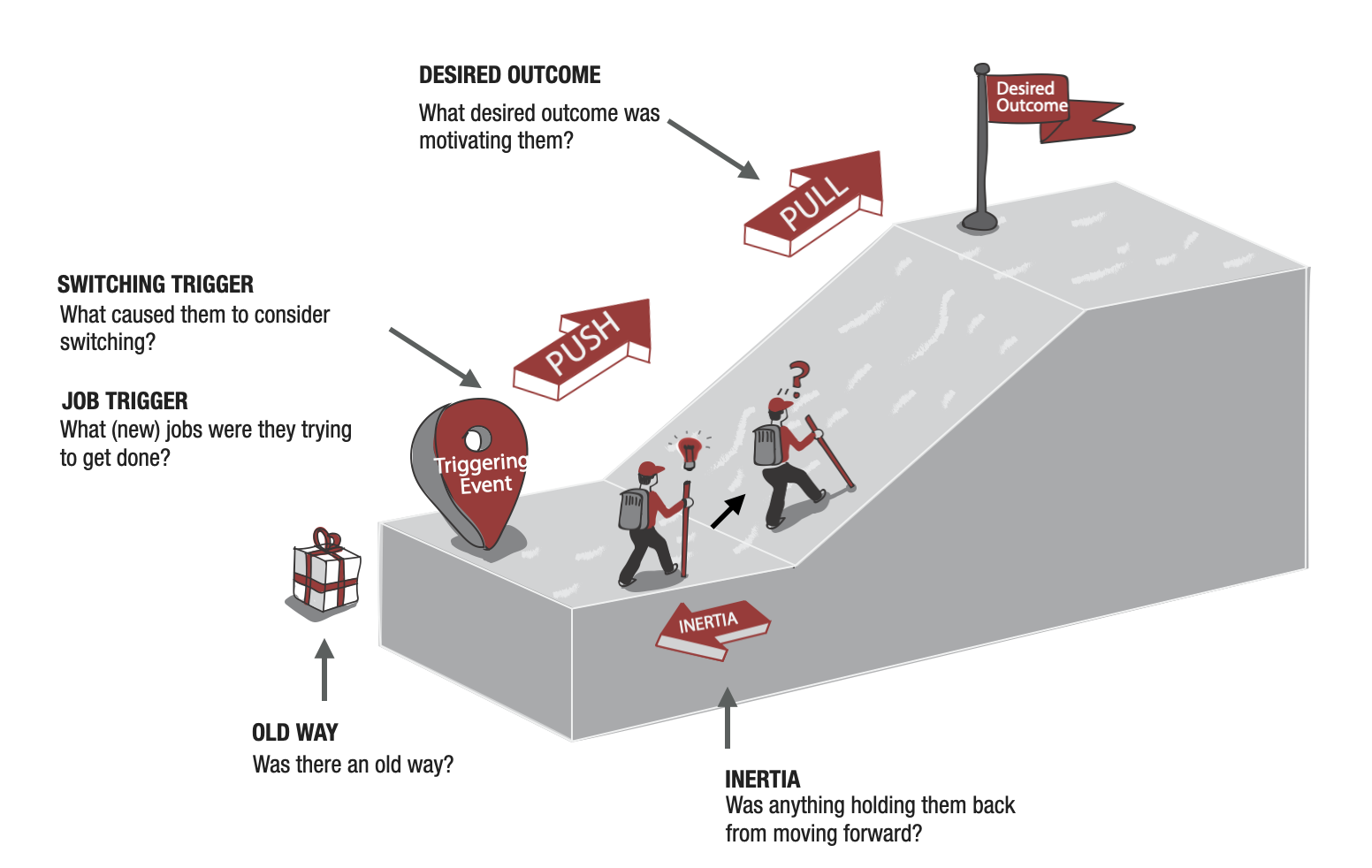
So where do customer forces come in? Each of the state transitions in the timeline (e.g., going from passive looking to active looking) is driven by the interplay of four forces:
Think of the customer journey as an expedition to the summit of Mount Everest. Why does someone embark on such a journey?
PUSH (motivation to act)
There have to be certain things that occurred in the person's environment that motivated them to act. These are often a combination of situational triggering events.
Examples of push:
A fellow mountain climber friend recently reached the summit.
They reached a critical milestone in their life and made it a goal.
PULL (attraction of the desired outcome)
Once the desired outcome of reaching the summit gets planted in their mind, it pulls them to act. Over time, the unique value proposition of the specific solution(s) they consider to get the job done also contributes towards pulling them up the mountain.
Examples of pull:
Visualizing the summit (desired outcome)
Joining a climbing expedition led by a seasoned climber (UVP of solution)
Push and pull move us toward the desired outcome. But making progress toward a desired outcome always requires effort. The following two forces capture things that detract them from the summit.
INERTIA
This force represents the resistance to getting started, often attributed to our allegiance, familiarity, and/or existing habits with an old way.
Examples of inertia:
Already committed to a different climbing expedition.
Other than the social challenge of breaking away from the group, costs may also be involved.
FRICTION
This force represents the obstacles (anxieties, problems, or pet peeves) attributed to hiring (selecting and using) a specific solution.
Examples of friction:
Will I be good enough to make the cut (anxiety)
Much more intensive training routine (problems)
Actual challenges during the climb itself - weather, altitude, etc. (problems)
The Four Forces in Action: Now that you understand these forces well, let's see them in practice through customer stories.
Customer Forces Story Structure
What is a Customer Forces Story?
A Customer Forces Story describes the causal forces that drive a customer to hire a specific product to get a job done.
We use stories because they help us recall what the customer did chronologically. From there, we attempt to make sense of the timeline by attributing a series of triggering events and forces that help explain their choices and actions.
The Three-Act Structure
A Customer Forces Story is broken into three acts: beginning, middle, and end:
Act 1 (Beginning) makes up roughly 25% of the story
Act 2 (Middle) makes up approximately 50% of the story
Act 3 (End) makes up approximately 25% of the story
I'll illustrate the process of writing a customer forces story using our previous example where Jack buys a pair of headphones:
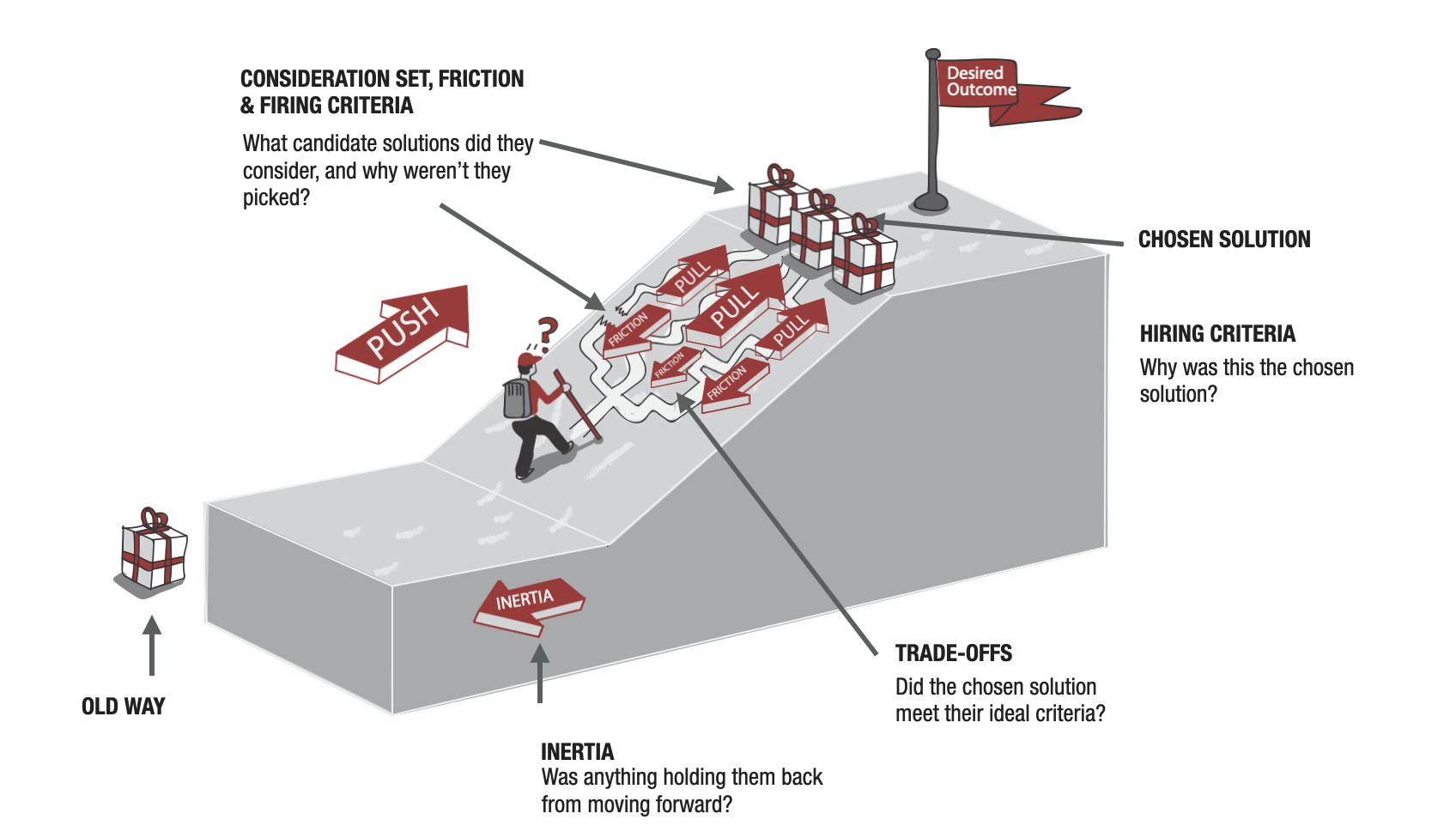
This is what his Customer Forces diagram looked like:
Let's turn this into a Customer Forces Story.
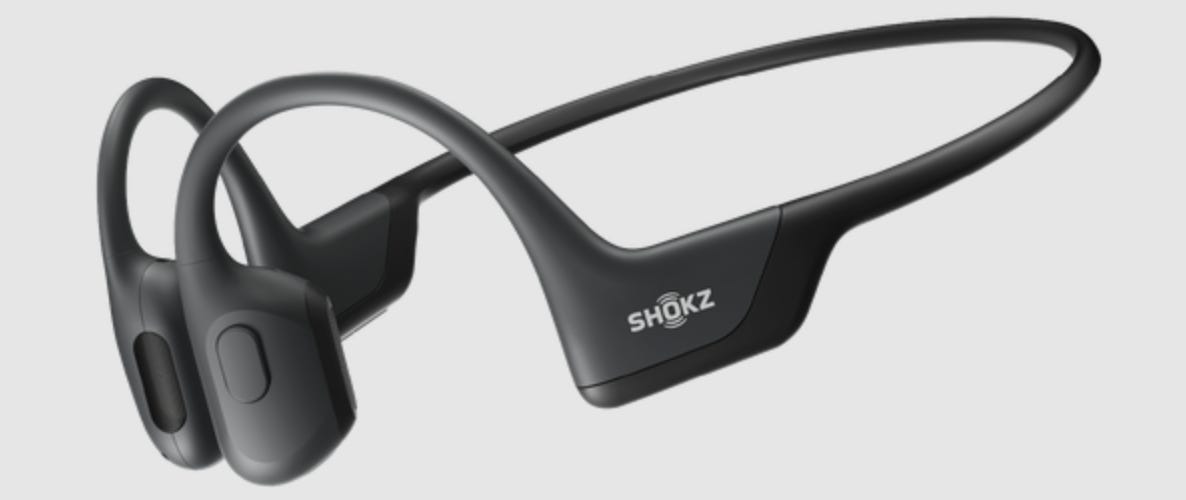
Shokz OpenRun Pro - The headphones Jack ultimately chose
Act 1: Beginning
Act 1 describes the transition from inaction to action:
In the routine job story, we want to capture why and how a job trigger causes a person to start doing a job.
In the switching story, we want to capture why and how a switching trigger breaks the old way and causes a person to look for a new solution.
For our example, we are trying to determine the series of events that moved Jack from some old state without these headphones (status quo) to him considering buying them (passive looking).
From the interview, we learn that Jack:
Recently joined a running program to train for a 10K race.
He didn't run regularly but worked out at a gym where he would listen to music during his workouts for motivation.
He tried doing the same while running, but his earbuds kept dropping out.
That pushed him to consider buying something better suited for running.
Later that day, he started doing some light research on "best running headphones." (passive looking)
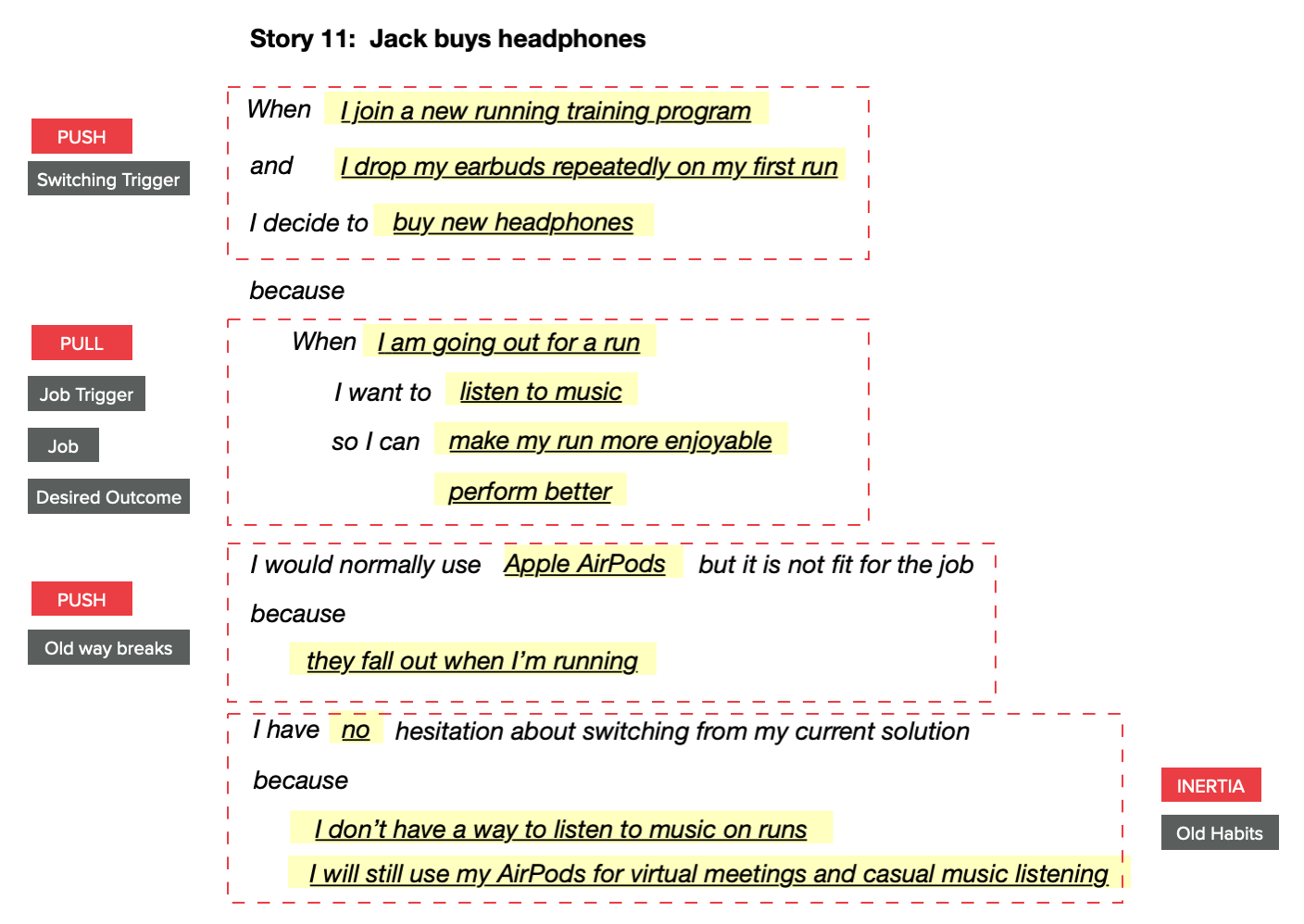
This is how I summarize the story:
Sanity Check: A good sanity check here is to see if PUSH + PULL > INERTIA.
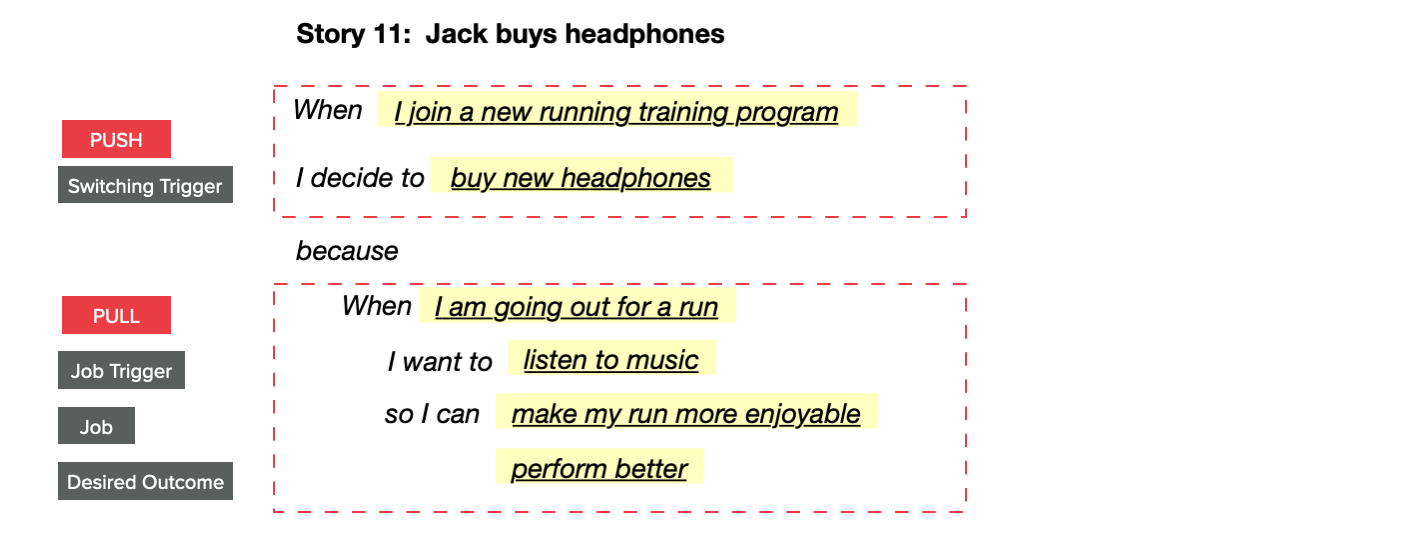
What if Jack had no old earbuds? You'd skip the Madlibs that cover the old way. The push of the situation (joining a new training program) and the pull of the desired outcome would have been sufficient to get Jack to move into passive looking.
Here's what the simplified version looks like (without the "old way breaks" section):
Act 2: Middle
Act 2 describes the hiring process:
In the routine job story, we want to capture why and how an existing alternative is hired (selected and used) to get the job done.
In the switching story, we want to capture why and how a new solution is hired (selected and possibly first-used) to get a job done.
For our running example, we try to understand how Jack researches, evaluates, and picks his chosen solution. This is the heart of the conversation where we ask him about:
His definition of an ideal solution.
What he's worried about?
The choices he considers along the way but doesn't pick.
Why he picks his chosen solution?
What, if any, tradeoffs he makes?
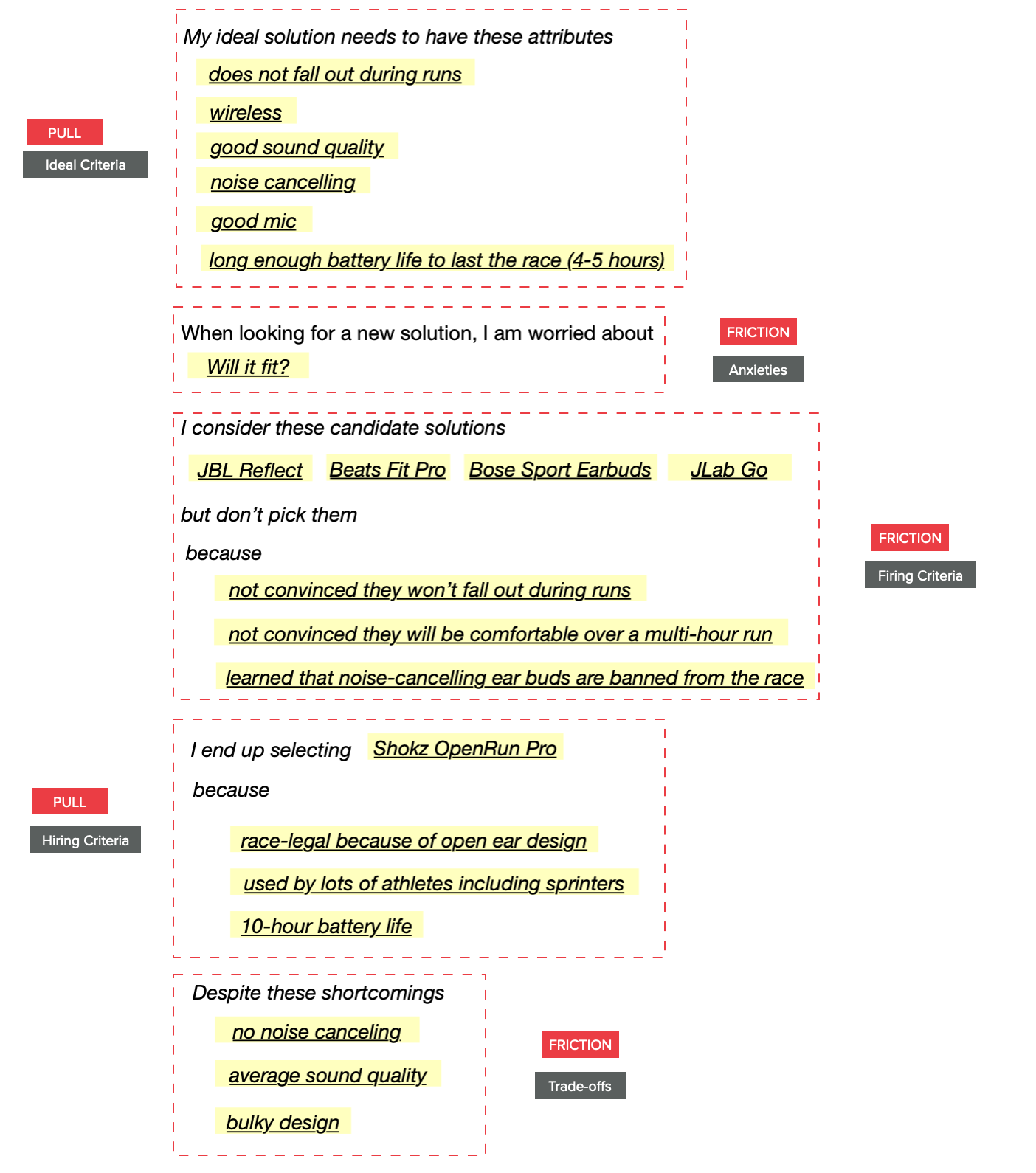
Here's Jack's complete Act 2 story in the Mad Libs format:
Act 3: End
Act 3 summarizes the person's satisfaction level with their chosen solution.
In the routine job story, we want to summarize the person's satisfaction level with their existing alternative.
In the switching story, we want to understand the person's satisfaction level with their new solution.
Wrapping up the running example, our goal in Act 3 is to understand if:
Jack is still using the chosen solution for the job he hired it for (big hire).
Are there any new jobs he's also using the product for (little hires)?
Are there certain jobs he's not using the product for?
What's his overall satisfaction level with the chosen solution?
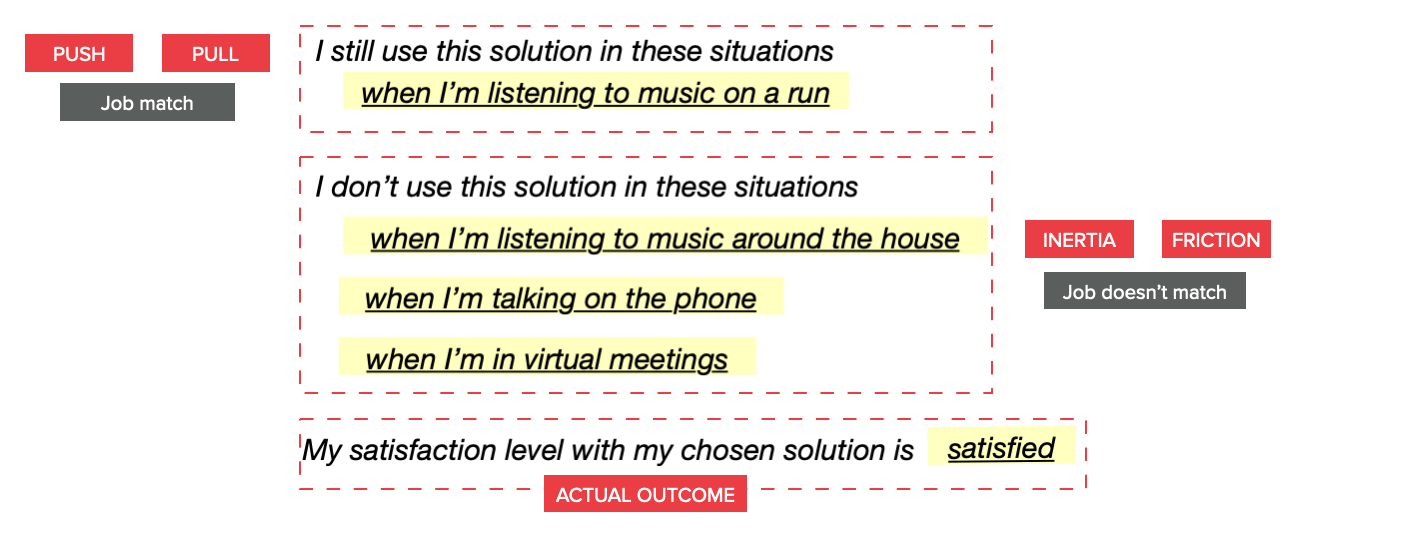
Here's Jack's Act 3 story in the Mad Libs format:
Why This Format Matters: Yes, these Madlibs are intentionally worded and structured in a specific way to normalize and encode a "switching" story consistently.
Doing this opens the door to systematically:
Creating jobs-based customer segments
Prioritizing problems worth pursuing
Designing "better" solutions
Now that you've learned how to unpack problem discovery interviews into Customer Forces Stories, it's time to practice with the first Perceptive Learning Activity (PLA).
Summarize this Sarah Laptop Bag Interview
Context
Your team is exploring the opportunity space in the laptop bag market. A couple of your team members interviewed Sarah, who recently purchased a new laptop bag.
Objectives
Your objective is to analyze and summarize the interview into a Customer Forces Story.
You are explicitly trying to uncover the following:
What triggered Sarah to buy a new laptop bag?
Why did she buy them, for what job, and to achieve what desired outcome?
What other solutions did she consider and not pick?
To download the audio file, right-click the link and select the appropriate browser option to save or download the linked file.
2. Write a Customer Forces Story
As you listen to the interview, take notes and then write Sarah's complete Customer Forces Story using the three-act structure you learned above.
Document her journey from trigger to satisfaction, capturing all four forces (PUSH, PULL, INERTIA, FRICTION) along the way.
Perceptual Learning Activity: Tyler Car Purchase
Context
Your team is exploring the opportunity space in the car market. A couple of your team members (Bob and Chris) interviewed Tyler, who recently purchased a new car.
This is your second PLA - a chance to reinforce the pattern recognition skills you developed with the Sarah Laptop Bag exercise.
Right-click and select "Save Link As" to download the audio file.
Your Assignment
Analyze Tyler's interview and write a complete Customer Forces Story following the same five-part template.
What You Should Notice
By your second interview analysis, you should start to see:
Pattern Recognition Emerging: Similar triggering events across different product categories
Faster Insight Extraction: You're starting to hear forces in real-time
Deeper Questions Arising: "Why that trigger and not earlier?" "Which anxiety was strongest?"
The Drama Factor: Could you imagine that buying a car could be filled with this much drama? Customer forces stories are dramatic stories. The more drama (emotion) and struggle you find, the more the opportunity for innovation.
Pattern Recognition Checkpoint
The 3-5 Story Rule
There aren't an infinite number of customer forces stories for any given market. Patterns quickly emerge, and most markets have 3-5 stories that reoccur.
After 10-15 interviews in your market, you'll notice:
The same 3-5 triggering events
The same 3-5 desired outcomes
The same 3-5 anxieties
The same 3-5 habits
Your job isn't to collect 1,000 unique stories. Your job is to identify the 3-5 patterns that explain 80% of buying behavior.
From Pattern to Strategy
Once you know the patterns, you can:
Craft Better Messaging - Lead with the triggering event, speak to the emotional outcome, address the top 3 anxieties upfront
Time Your Outreach - Target people experiencing the trigger, reach them during active looking phase
Design Your Solution - Solve for the push, deliver on the pull, reduce anxieties, overcome habits
Prioritize Your Customers - Focus on segments with strong push, avoid segments stuck in habits
Your Checkpoint Assessment
Before moving to SKILL 2, verify you can:
Identify all four forces (Push, Pull, Anxiety, Habit) in a conversation
Spot the triggering event even when mentioned casually
Write a five-part Customer Forces Story
Recognize patterns across multiple interviews
Synthesize rather than transcribe
If you can do all five, you're ready for SKILL 2: Conducting Interviews.